
Few places on Earth are as rugged and remote as Alaska. With its towering mountains, vast glaciers, and frigid rivers. Alaska is a land of wilderness and extremes. Alaskans have always been tough and determined. Whether facing down grizzly bears or braving subzero temperatures, they have never backed down from a challenge.
… And that spirit of determination was displayed during WWII when Alaskans worked tirelessly to protect their lands and way of life. Two of the most remote islands of Alaska, Attu and Kiska, were taken by Japanese forces. They are two of the westernmost islands in the Aleutians – and they played an important role in WWII.
For over a year, the people of Attu and Kiska remained under Japanese control and they were subjected to a brutal regime. During that time, the island’s inhabitants were forced to live in harsh conditions – and many were killed or imprisoned in Japan.
The invasion of Attu and Kiska
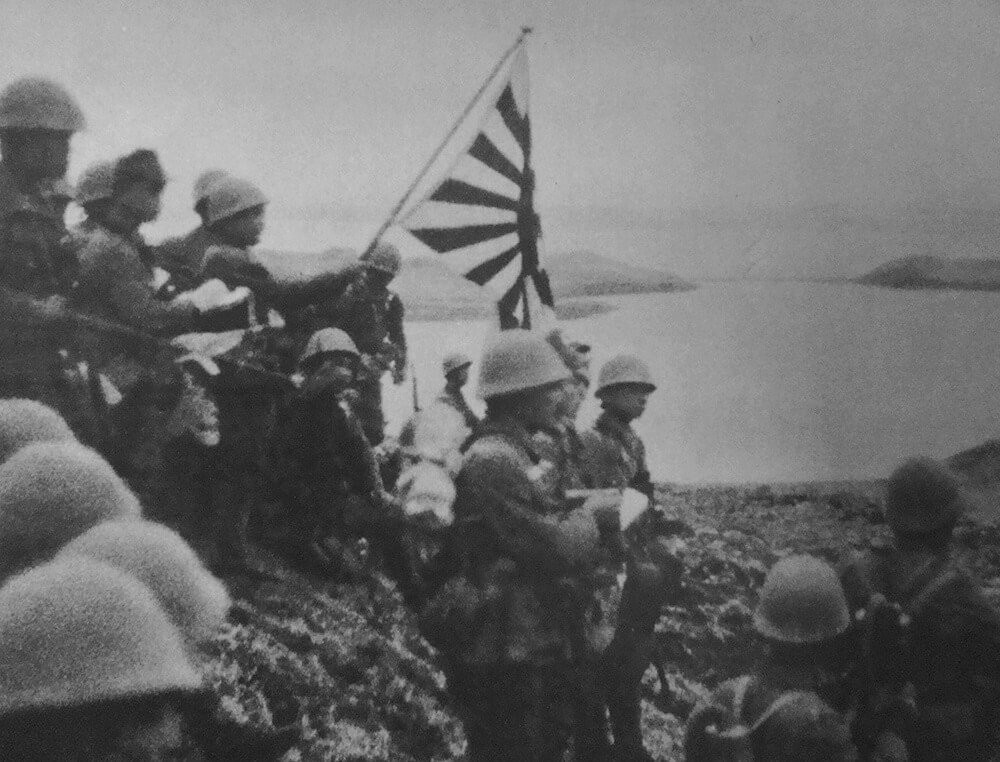
Japanese troops raise the Imperial battle flag on Kiska Island in the Aleutians on June 6, 1942. Public domain
In June 1942, Japanese troops invaded and occupied Attu, using it as a base from which to launch attacks on American ships. The occupation of part of the Aleutian Islands was a hard blow for the American morale – and especially for the Alaskan population that saw their way of life in danger. In fact, 44 people were living in Attu, most of them native Americans inhabiting their ancestral land.
Although this island was sparsely inhabited, its geographical location was key to Japan’s control of the North Pacific. As a result, Attuans were taken prisoners and held in Hokkaido until the war ended. Even so, they could not return home… and few survived captivity. After a long journey by boat across the Philippines to San Francisco, and then a stop in Seattle, they were relocated to the village of Atka (also in the Aleutian Islands) because of the investment to rebuild the villages in such a remote location in Attu was considered quite costly.
Only their descendants were able to see the place their ancestors occupied on Attu more than 70 years later.
In Kiska, at the time of the Japanese invasion, there were only U.S. Aerological Detail personnel conducting research on the island. At first, they abandoned all their belongings and escaped from the Japanese soldiers. But, staying safe in such extreme weather conditions was complicated – and they decided to surrender; except for Williams C. House, who remained hidden eating plants and earthworms. However, hunger and cold made him turn himself in after 50 days of escaping from the Japanese.
Meanwhile, the U.S. Army spent months planning how to retake Attu and Kiska. But weather conditions and the remoteness of the island made it a logistical feat.
On May 11, 1943, up to 12,500 soldiers landed on Attu expecting to easily defeat the Japanese forces. However, it was much harder than planned!
The Battle of Attu lasted 19 days and it was recorded in history as the only land battle fought in American territory.
The Japanese forces were already acclimated to the harsh climatic conditions of the island and prepared the defense for the arrival of the American troops. On the other hand, U.S. soldiers were not prepared for the particular circumstances on the island – and over 2,000 succumbed to gangrene, trench foot, and frostbite.
In any case, the heavy bombardment and damage done by the American artillery were taking their toll on the Japanese occupation forces. In the battle, Colonel Yasuyo Yamasaki and his men were completely outnumbered by the American forces. The Japanese could no longer endure one more day of American attacks. Most of them were without food, exhausted, and emotionally shattered.
In desperation, they decided to make a Banzai charge against the American troops, seeking to have an honorable death according to Japanese traditions and their Bushido code.
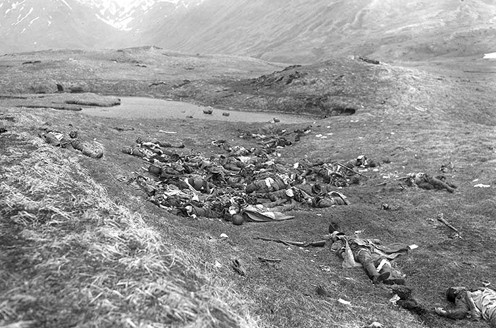
Japanese troops lie where they fell during the final banzai charge at Chichagof Harbor on 29 May 1943. Public domain
Before dawn on May 29, 1943, they charged into the American camp, taking by surprise many of the soldiers who were still resting. The combat was fierce and was highlighted by the ferocity of the bayonet charge amidst the darkness and fear of the soldiers who had to closely fight each other in hand-to-hand combat. After hundreds of casualties (and many knives and bayonet fights), the confrontation ended after a few minutes when the overwhelming fire of the American machine guns managed to defeat thousands of Japanese.
In the end, 2,351 Japanese soldiers were killed and only 28 were captured, while American casualties during the battle totaled 549. It was one of the few battles in which American and Japanese troops engaged in direct hand-to-hand combat, and one of the most brutal battles of WWII.
Retaking Kiska was easier. On August 15, 1943, American troops landed in Kiska… But it was already abandoned. However, the Japanese left all kinds of deadly traps causing almost 200 losses combined with the harsh weather and friendly fire.
In the aftermath of the war, the 28 Japanese soldiers who had been taken prisoner were repatriated to Japan. Over time, the enmity that had existed between the Alaskans and the Japanese faded – and today, there is a strong sense of friendship between Alaska and Japan.
The military bases in Alaska today
Alaska is a unique state in many ways, and one of the most notable traits is its relationship with the military. Unlike most other states, Alaska actually has a high per capita military presence with bases spread throughout the state.
This is due in part to its strategic location as Alaska sits just across the Bering Strait from Russia. Also, the precedent of the Battle of Atu left an indelible mark on the memory of thousands of Americans who gave their lives to protect American soil.
Though these military bases played a vital role in defending the United States against Japanese aggression in WWII, they mean much more than protection for the local community. Military jobs play an important role in the state’s economy and its ability to provide for its citizens. Actually, military bases are key in the development of Alaska – and the military presence remains essential because the nine military bases create thousands of jobs.
These jobs provide much-needed income for many families and help to support the state’s infrastructure. However, these bases not only provide jobs and economic stability but also improve the overall quality of life of locals. For example, many bases offer amenities like childcare and recreation facilities that would otherwise be unavailable.
Given all these benefits, it’s no wonder that Alaskans generally support the continued presence of military bases in their state.
Attu and Kiska are a haven of peace nowadays
The Aleutian Islands are a peaceful and beautiful place today. Both islands have been uninhabited since 2010 and are rarely visited. There are several reasons why these two islands remain unoccupied.
First, the climate is harsh and challenging, with strong winds and cold temperatures that make it difficult to sustain human life. Second, Attu and Kiska are also home to an abundant variety of wildlife, including bald eagles, seals, and whales. Actually, the most important feature of the islands is their wildlife which is jealously protected by the Alaska Maritime National Wildlife Refuge authorities.
Additionally, Attu and Kiska are very difficult to reach due to their remote location. There are no regular ferry or flight services to these islands, making them effectively cut off from the rest of the world, and it is required special permits to visit these islands. With their rocky landscapes and wildlife, Attu and Kiska provide a stark contrast to the rest of the state – and they definitely offer a unique window into the natural history of Alaska.
Nevertheless, the remains of the military operations can still be seen in multiple bomb craters, as well as numerous shipwrecks and relics from WWII. Also, Attu is home to two cemeteries to house those killed in battle, and the sites where most of the events occurred are considered national historic landmarks with monuments to commemorate the sacrifice of Americans and ancient Alaskan villagers who bravely offered their lives.
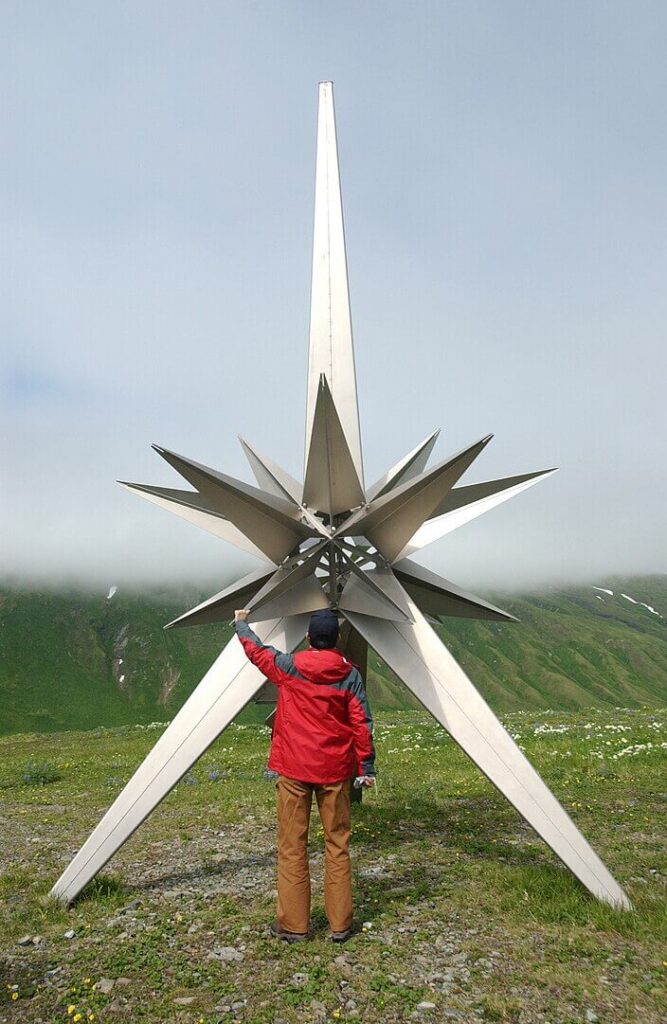
U.S. Coast Guard Petty Officer 1st Class Kurt Fredrickson – Photo page, U.S. Coast Guard Picture description page, U.S. Coast Guard U.S. Coast Guard Visual Information Gallery
In the end, this dark period in Alaska’s history gave birth to a flourishing era of economic and cultural revival as the military bases established a connection with the communities that raised the quality of life of the local population. That’s why Alaskans still remember the courage and determination of those who defended them during World War II. They are people who know how to persevere in the face of adversity – and in a state that is as wild and rugged as Alaska, that is no small feat.
Featured image: Japanese Occupation Site, Kiska Island by Etaohc. Public domain.
